

Smart Energy Management: The Foundation of a Sustainable Energy Future for Utilities
Global electricity demand is forecast to grow by 3.6% annually from 2026 through 2030, driven largely by industry, electric vehicles, air conditioning, and data centers. As electrification accelerates and generation becomes more distributed and diverse, grids will require greater flexibility, storage, transmission capacity, and distribution-system upgrades.
Global Energy Demand is Outpacing the Capacity
The U.S. illustrates this trend clearly. While residential, commercial, and industrial customers still account for most electricity consumption, new growth is increasingly coming from data centers, electric vehicles (EVs), cooling, and electrification. According to data from Lawrence Berkeley National Laboratory, Iin 2025, U.S. retail electricity sales totaled about 1,515 TWh in residential, 1,493 TWh in commercial, and 1,042 TWh in industrial. Data center electricity use alone rose from 58 TWh in 2014 to 176 TWh in 2023 and could reach 325–580 TWh by 2028. Meanwhile, unmanaged EV charging is emerging as another important source of local grid stress, particularly on distribution systems.
Together, these trends are raising pressure on both bulk power systems and local distribution networks.
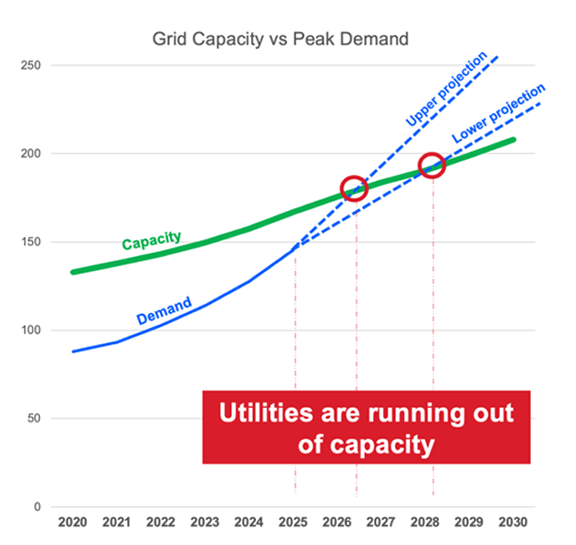
This gap between growing demand and limited grid capacity isn’t temporary; it’s structural. It’s also reshaping how utilities must operate.
Despite the sharp rise in demand, energy supply and transmission capacity isn’t keeping up. High-emission power plants are being phased out due to environmental concerns. The rollout of renewable energy is steady but gradual, and because much of it is distributed across countless rooftop solar panels, it creates new complexity.
Compounding this challenge is aging grid infrastructure that was never designed for today’s dynamic, distributed, high-load environments. As a result, utilities around the world are facing unprecedented strain. This growing imbalance is further compounded by a fundamental shift in how energy is produced.
The Transformation of Power Generation
Conventional power sources like coal are declining in popularity due to emissions, environmental risks, and the challenges of disposing waste. Although they once provided stable, inertia-rich baseload power, their gradual retirement is affecting grid stability.
The Rise and Limitations of Renewable Energy
Renewables are emerging as the dominant alternative, offering low-emission generation and long-term sustainability. However, without sufficient storage, flexibility, and grid modernization, they introduce variability that must be actively managed. Solar, wind, and hydroelectric production depend heavily on weather conditions and often reach their peak output at times that don’t align with periods of highest energy demand. This mismatch between generation and demand introduces volatility into grid operations, driving price fluctuations and complicating grid planning. Storage technologies exist to counter these effects, but battery systems remain constrained by limited capacity and lifespan.
An Evolving Landscape of Energy Consumption
Electricity consumption continues to climb as industrial activity expands worldwide. Emerging economies, particularly China and India, are leading much of this growth as they scale their manufacturing and technological capabilities.
Electrification of Transport and Technology
Transportation is rapidly electrifying, with projections suggesting that electric vehicles may account for 40% of global car sales by 2030. Each EV, especially when charged at home, adds significant load to local circuits. Simultaneously, AI, machine learning, and data-intensive applications require huge amounts of computing power, necessitating new, energy-dense data centers around the world.
Increasing Climate-Driven Consumption
Extreme weather events and rising temperature variations are also driving significant growth in heating and cooling needs. HVAC installations are increasing rapidly, placing additional peak demand on already stressed distribution networks.
The Grid is Under Pressure
Grid infrastructure designed decades ago now operates under strain from rising demand, new technologies, and distributed generation. Many regions have systems that are undersized for today’s energy landscape, and weather-related events add further risk of outages.
The Urgent Need for Effective Energy Management
To ensure reliability and resilience, utilities need to address infrastructure limitations, integrate renewable sources, and manage the volatility of both supply and consumption. Smart energy management is now foundational to grid reliability and future growth.
To navigate this increasing complexity, utilities must move beyond traditional grid management toward a new operating model.
A New Strategic Playbook for Utilities
1. Smarter Management of Energy Consumption
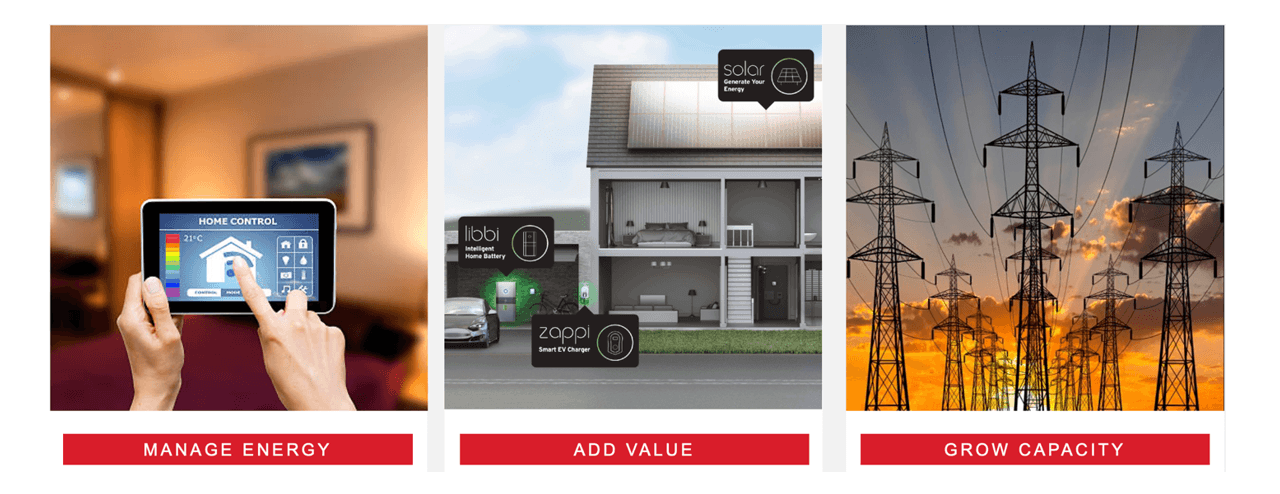
Utilities are shifting toward strategies that optimize when and how energy is used. The fastest way to increase capacity is to better manage demand. With smarter consumption management, they can reduce and delay costly infrastructure expansions. Integrating distributed renewable resources such as rooftop solar and home batteries also provides a valuable supplementary supply.
2. Enhanced Customer Value and Engagement
As utilities evolve, they are moving beyond commodity energy delivery by offering tailored pricing models, personalized energy services, and new third-party home energy products. Customer engagement becomes a grid asset instead of just a service layer. This elevates customer value while opening new revenue streams for the utilities.
3. Sustainable Growth of Production and Capacity
When smart energy management solutions optimize and balance demand, utilities can increase effective capacity, accelerate renewable integration, and improve the efficiency of existing assets through data-driven insights. Optimization reduces the need for costly infrastructure expansion.
The Core Challenge: Bridging the Grid-Edge Gap
At the center of this transformation is a critical blind spot: the grid edge. This lack of visibility behind the meter is increasingly recognized by utilities as a key barrier to demand flexibility and distributed energy integration. With more homeowners adopting rooftop solar, battery storage, and electric vehicles, utilities lose granular visibility into real-time household energy behavior. Although utilities understand transmission constraints, generation availability, and systemwide load, they often have no insight into real-time household consumption, private energy generation, or storage behavior. This visibility gap prevents utilities from coordinating load, predicting peaks, reducing strain, and making optimal investment decisions.
Why Closing This Grid-edge Gap Matters
Without insight into what happens behind the meter, utilities cannot reliably balance supply and demand, integrate renewables, or support flexible loads. Bridging the grid-edge gap is essential for maintaining grid reliability and ensuring a sustainable long-term energy system.
Silicon Labs’ Smart Energy Management Vision
To operationalize this new model, utilities require a unified connectivity layer across both the grid and the home.
Wi-SUN: The Foundation of Reliable Grid Connectivity
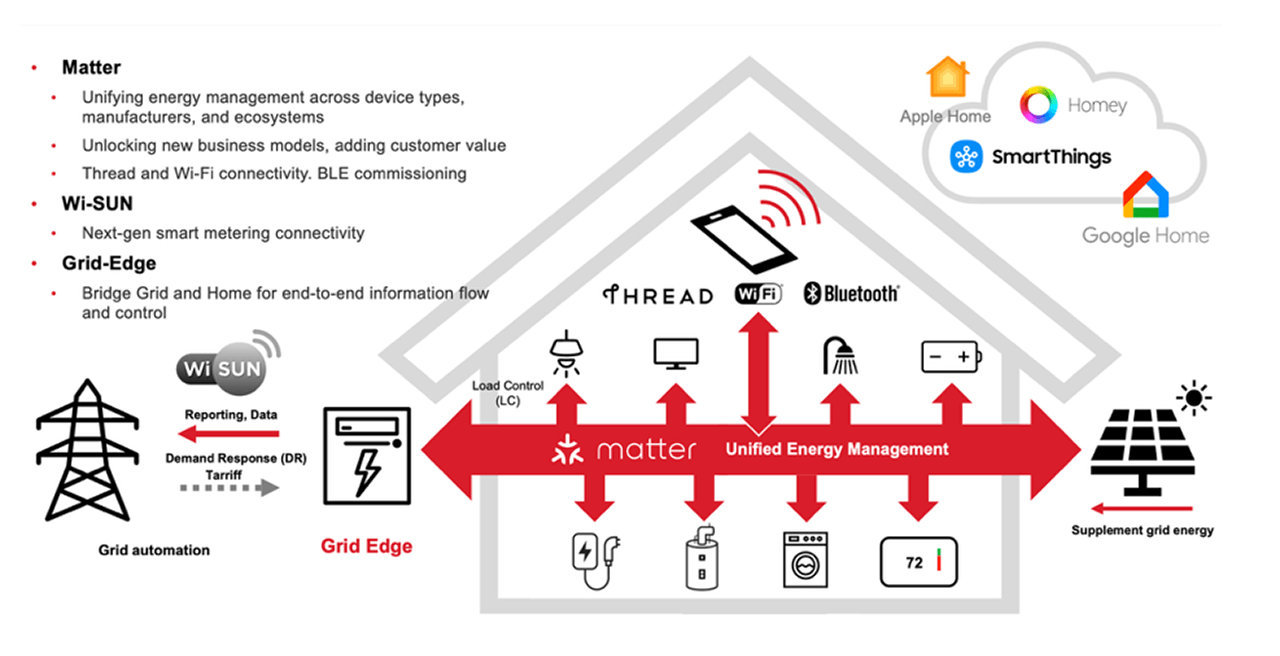
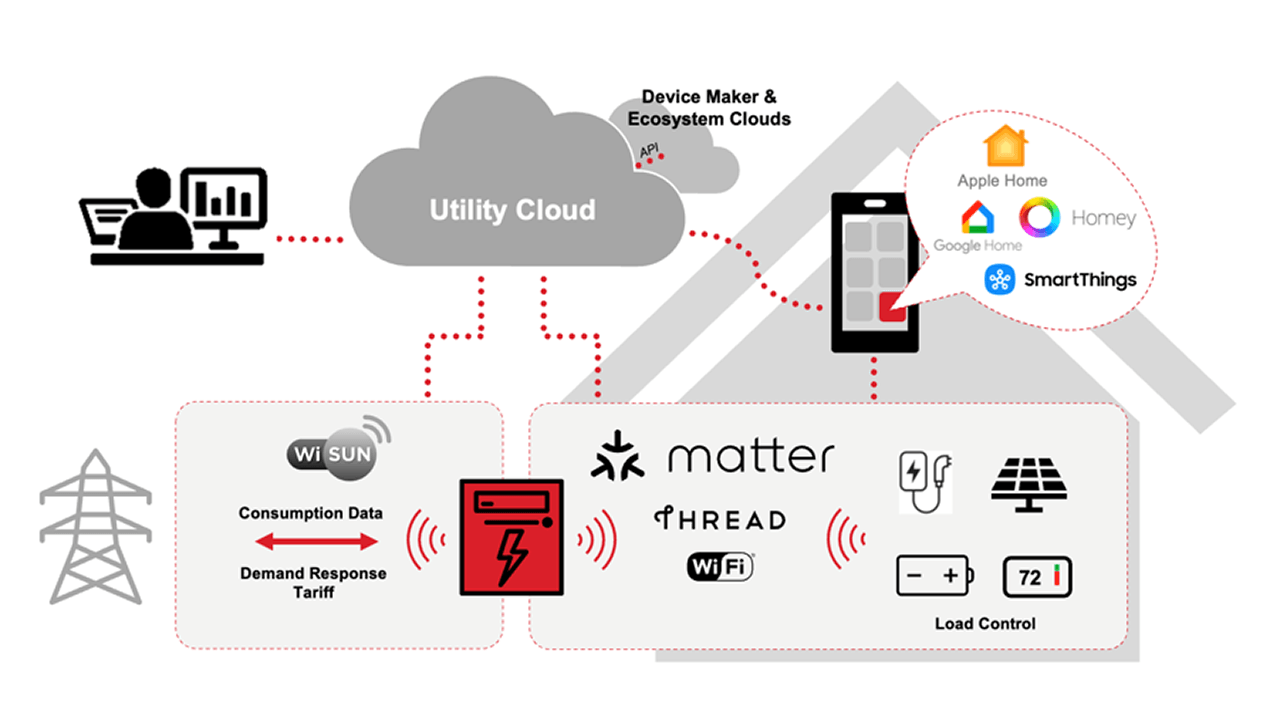
Silicon Labs enables grid-side transformation through Wi-SUN, a long-range, highly reliable wireless technology for smart meter communication. Wi-SUN enables utilities to access real-time consumption data, provide tariff information, and implement demand response programs across millions of endpoints through secure, scalable mesh networks.
Matter Energy: Unifying Energy Management Inside the Home
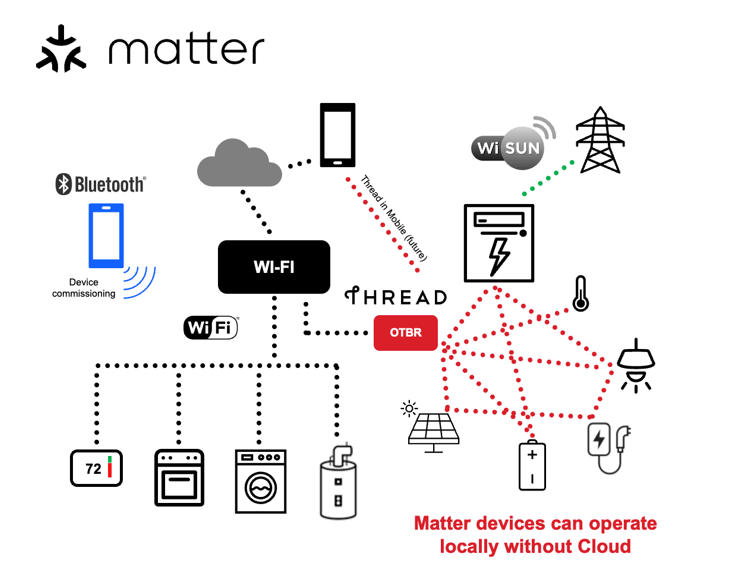
Inside the home, Silicon Labs enables seamless energy visibility and control through Matter Energy. This protocol allows all smart home devices, including thermostats, HVAC systems, EV chargers, and more,—to share energy information over Thread or Wi-Fi. Matter removes the need for proprietary integrations and avoids cloud dependencies, enabling devices to communicate directly and securely.
A Breakthrough for Both Utilities and Consumers
Through Matter, homes can automatically shift appliance start times, pause operations, or adjust power usage during grid events. Users can manage all of this through their preferred smart home ecosystem app, regardless of manufacturer. Many regions require energy-aware systems, making Matter an increasingly vital technology for regulatory compliance.
The Result is a Connected, Efficient, and Sustainable Energy Ecosystem
Benefits of Utilities
With real-time residential insight, utilities can dynamically coordinate consumption and supply. They can activate demand response programs, reduce peak loads, offer dynamic pricing, and optimize investments in renewable production and transmission. This creates a more stable grid and a more sustainable, profitable business model.
Benefits for Device Makers
Manufacturers gain access to a larger market through unified ecosystems, reduce development complexity through standards like Matter, and incorporate features such as load control directly into their products.
Benefits for Consumers
Consumers enjoy lower energy costs through personalized pricing and incentives, along with greater control and comfort as smart systems automatically optimize energy use. With all devices managed through a single, familiar app, the user experience becomes both seamless and intuitive.
Shaping the Future of Clean, Connected Energy
Silicon Labs’ Smart Energy Management solution enables a fully connected energy ecosystem where utilities, device makers, and consumers all benefit. By closing the grid-edge visibility gap, utilities gain real-time control over supply, demand, and distributed energy resources.
This end-to-end connectivity, from grid to home, transforms the grid from a static infrastructure into a dynamic, responsive system. Utilities that act now will be best positioned to lead the transition to a decentralized, electrified energy future, where competitive advantage is defined by the ability to orchestrate energy at the grid edge.