

30 Years of Innovation – And What Comes Next
Silicon Labs began with three engineers, an appetite for solving difficult problems, and, famously, a coin toss.
The coin toss helped Nav Sooch, Dave Welland, and Jeff Scott decide to start a company. What followed was anything but chance. Back in 1996, they shared a conviction that talented engineering teams could rethink complex systems, integrate more functionality into silicon, and make sophisticated technology simpler for customers to use.
Thirty years later, that conviction still defines Silicon Labs. The technologies have evolved from modems and mixed-signal devices to secure, intelligent wireless connectivity, but the instinct behind them has remained constant: take on the hard problems and build what the world will need next.

1996 - 2000: Turning Difficult Designs into Commercial Breakthroughs
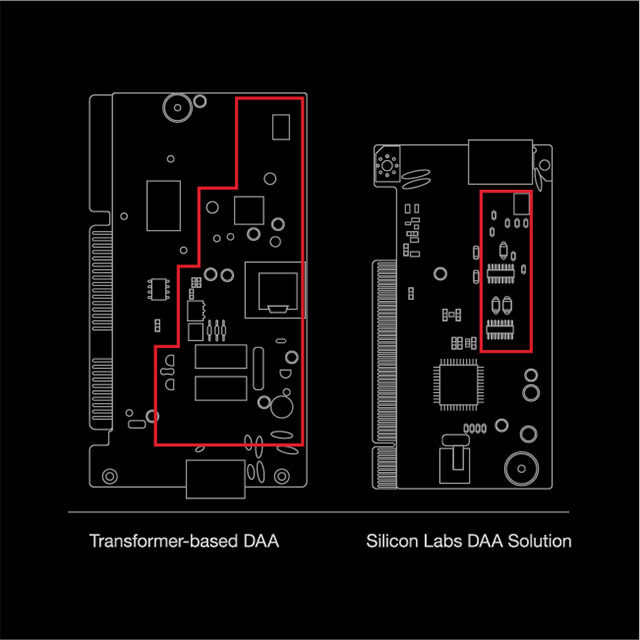
Silicon Labs’ first major opportunity came from DAA technology, or direct access arrangement, which is the circuitry connecting a modem to a telephone line. At the time, this function typically required a collection of bulky discrete components, including transformers, relays, and optical isolators.
Introduced in 1998, Silicon Labs’ DAA replaced much of that hardware with an integrated silicon solution that occupied approximately one-fifth of the circuit-board space. The design reduced cost and complexity, supported a single global modem design, and helped make modem connectivity practical in smaller products such as laptop computers.
Another early breakthrough was a CMOS-based radio-frequency synthesizer for mobile phones. Together, these first two IC designs demonstrated the founders’ central thesis: functions previously considered too difficult or impractical to integrate could be rebuilt in silicon.
These early successes convinced Austin Ventures to fund Silicon Labs with a $5 million first-round funding in March 1997. In just two years, Silicon Labs was profitable. Then, in March 2000, less than four years after its founding, the company completed its initial public offering on Nasdaq under the ticker SLAB. The IPO raised nearly $100 million and was celebrated in the industry for the relatively small amount of venture funding compared with the scale the company had already achieved.
These formative years proved that the founders’ engineering-centric business model could produce commercially significant products across large global markets.
2000-2012: Evolving Alongside the Connected World
As communications technology evolved, so did Silicon Labs.
The company grew beyond its original modem and cellular products into microcontrollers, radio and television tuners, timing, isolation, sensors, automotive technology, and wireless connectivity. Each move extended the same underlying approach: simplify designs, reduce power, shrink component count, and give developers more integrated technology with which to build.
The 2003 acquisition of Austin-based Cygnal Integrated Products marked Silicon Labs’ entry into the broad market for highly integrated, analog-intensive 8-bit microcontrollers. With Cygnal came a portfolio of more than 50 general-purpose products, pushing Silicon Labs beyond application-specific communications chips and establishing an important foundation in embedded computing.

The company was growing fast enough to require a permanent presence in downtown Austin. In 2006, Silicon Labs moved into its corporate headquarters overlooking Austin’s iconic Lady Bird Lake. The move gave Silicon Labs a highly visible home in the city where it was founded, and a foundation from which it could pursue a much broader technology mission.
Silicon Labs also helped move radios and televisions away from traditional mechanical and module-based tuner designs. In 2012, the company announced that it had shipped its 100 millionth silicon television tuner. Silicon Labs said its TV tuners had been adopted by virtually all major television manufacturers, improving reception and picture quality while reducing system cost and complexity.
During this period, Silicon Labs components supported an increasingly diverse commercial electronics landscape, from computers and portable media players to televisions, automotive systems, home entertainment products, and the first generations of connected-home devices.
2012 - 2020: Building a Platform for the IoT
The 2012 acquisition of Ember represented a major step in that evolution. Ember brought Zigbee technology and extensive experience in low-power wireless mesh networking. Its technology had already shipped in more than 25 million devices and was being used in smart energy, connected-home, security, lighting, and industrial applications.

Three years later, Silicon Labs acquired Bluegiga, adding Bluetooth and Wi-Fi modules, protocol stacks, software, and development tools. Silicon Labs then introduced its Blue Gecko portfolio, combining ultra-low-power Gecko microcontroller technology with Bluetooth connectivity, modules, SoCs, development kits, and software.

Connectivity was moving into homes, factories, healthcare products, energy systems, cities, tools, appliances, and infrastructure. Battery life, security, interoperability, protocol support, and development simplicity were becoming as important as radio performance. The company was positioning itself to meet these needs.
By its 20th anniversary in 2016, Silicon Labs had shipped more than seven billion devices, accumulated more than 1,500 patents, and grown to approximately 1,200 employees worldwide.
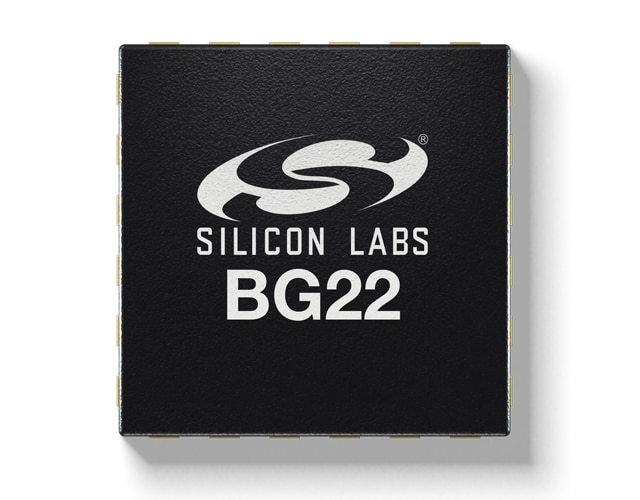
The BG22 Bluetooth Low Energy SoC, introduced in 2020, became an important example of the scale and specialization required by this new market. Silicon Labs designed BG22 specifically for high-volume, battery-powered Bluetooth products, combining low transmit and receive power with a low-power Arm Cortex-M33 processor. The platform was intended to support applications such as asset tags, beacons, portable medical devices, connected-home products, and industrial sensors, with battery life that could extend beyond five years in some coin-cell designs.
Silicon Labs’ role was also expanding across industry ecosystems. Its portfolio came to span Amazon Sidewalk, Bluetooth, Matter, Thread, Wi-Fi, Wi-SUN, Zigbee, Z-Wave, proprietary wireless, and other technologies. The company contributed to standards development, certification efforts, software implementations, and partnerships intended to make connected products more interoperable and easier to deploy.
2020-2025: Going All In on Secure, Intelligent Wireless
In 2021, Silicon Labs made the consequential decision to sell its Infrastructure and Automotive business to Skyworks Solutions. The transaction included its timing, power and isolation, automotive, and broadcast products, along with related intellectual property and employees. The divestiture completed Silicon Labs’ transformation into a pure-play provider of secure, intelligent wireless connectivity for the IoT.
In 2022, it officially opened a new Hyderabad office that would become its global center for innovation. The expansion underscored Hyderabad’s growing role in global IoT innovation and also marked the start of Silicon Labs’ partnership with the International Institute of Information Technology - Hyderabad’s (IIIT- H) Smart City Living Lab.

The Next Chapter
That same willingness to make bold choices shaped Silicon Labs’ transformation into a pure-play leader in secure, intelligent wireless connectivity. It now informs the company’s next chapter with Texas Instruments.
In February, Texas Instruments and Silicon Labs announced a definitive agreement under which TI will acquire Silicon Labs. This combination brings Silicon Labs’ embedded wireless portfolio together with TI’s analog and embedded-processing products, manufacturing capacity, market reach, and scale. Together, we’ll accelerate innovation and expand access to embedded wireless connectivity across a growing range of applications.
Much has changed since three mixed-signal engineers debated their future over weekend brainstorming sessions and a long lunch. Modems gave way to smartphones, individual wireless links grew into multiprotocol ecosystems, connected devices expanded from consumer electronics into buildings, factories, cities, healthcare, energy systems, and infrastructure. Intelligence began moving from the cloud to the edge. And nobody carries quarters anymore.
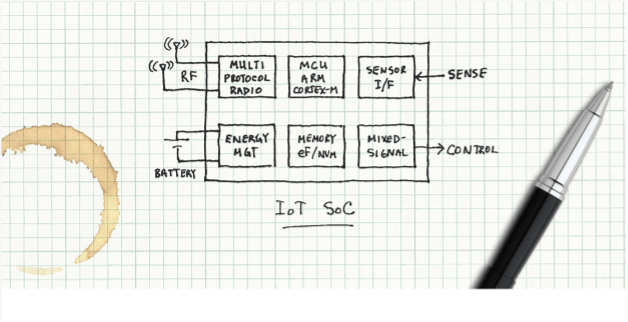
But the idea behind Silicon Labs has remained remarkably consistent: take on the difficult engineering problems, rethink how a system should be built, and make complex technology simpler for customers to use.
Thirty years after that coin toss, the scale of the opportunity is greater than the founders could have imagined. Connected intelligence is now moving into homes, factories, cities, healthcare, energy systems and critical infrastructure. Technology will continue to change, but the Silicon Labs approach endures: solve the difficult engineering problems, simplify complexity for customers and help make what’s next possible.
And had the coin landed on tails, founder Nav Sooch later put it, “I think we would have gone two-out-of-three.”