


Matter Product Planning: Key Considerations Overview
Smart home ecosystems have been around for years, with leading platforms like Amazon, Apple, and Google serving hundreds of millions of users worldwide. However, these ecosystems have traditionally operated in isolated silos, limiting interoperability across devices and platforms. With the release of the Matter specification, the IoT industry is entering a new, open era of smart home infrastructure.
Matter is an application-layer protocol designed to provide a common data model across IoT ecosystems. With Matter, smart home devices, gateways, smart speakers, and more can seamlessly communicate across ecosystem boundaries, enabling greater compatibility and flexibility.
This document demystifies the Matter protocol and its impact on IoT ecosystems for product managers and decision-makers. It outlines the ten most important considerations when planning a Matter product launch—including how Matter transforms product development and integration, key device types, certification requirements, and certificate management during manufacturing. With this guide, you can navigate the evolving Matter landscape, reduce risk and unexpected costs, and accelerate your product’s path to market.
The 10 Considerations - At a Glance
01 Matter Device Type
Standard or customized?
02 Native Matter or Bridged Device
How should you manage Matter certificates safely in manufacturing and beyond?
03 Own Matter Fabric or Ecosystem
Should you build your own Matter fabric or rely on ecosystems?
04 Matter + Ecosystems
Why integrate Matter with smart home ecosystems?
05 Matter vs. Ecosystem Stacks
What are the advantages of Matter Stack Vs. ecosystem-specific APIs?
06 Wireless Design
How do you optimize wireless design for Matter?
07 Embedded Development
Which of the three approaches is the best for your organization?
08 Testing & Certifications
What certification is required for your Matter product?
09 Certification Management
How should you manage Matter certificates safely in manufacturing and beyond?
10 Lifesycle Maintenance
How do you keep the Matter product installed base up to date throughout its lifetime?
Are You a Member of CSA?
All device makers building a product for Matter must register with the Connectivity Standards Alliance (CSA). You can learn more about the four levels of CSA partnerships on the CSA website and register directly via the online form.

01: Matter Device Type
What Kind of Device are You Building?
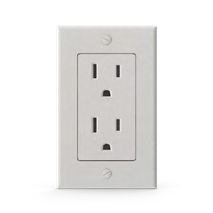
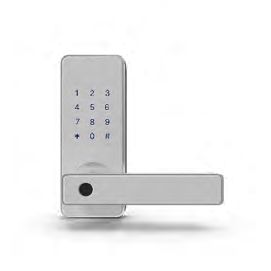
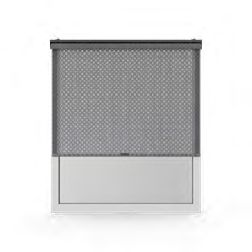
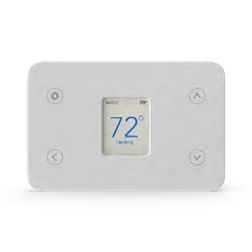
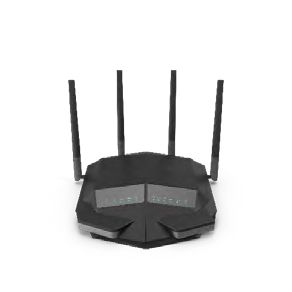
Device type is the first and most critical consideration when designing a Matter device. The Matter protocol works based on device type. Only those device types included and identified in the latest specification can function on a Matter system. For example, Matter 1.1 contains device types such as LEDs, switches, electricity plugs, locks, blinds, shades, garage door openers, thermostats, HVAC, and gateways. Other types of devices do not yet function on a Matter 1.1-compliant system.
If you are planning to build a device that is not specified in the current Matter release, and it is part of the roadmap, you can request CSA for a new device type to be included on the specification.
How can Silicon Labs help?
As a central CSA contributor, Silicon Labs is actively listening to connected device manufacturers like you. We can help influence Matter-specification evolution based on the needs of device manufacturers and consumers alike. We can implement new device types in our Matter code to experiment with and validate.
Device Types Currently Supported in Matter Specification 1.1
TVs
LEDs
Switches
Plugs
Locks
Blinds & Shades
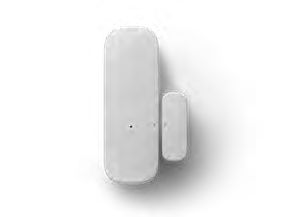
Sensors
Thermostats
Gateways
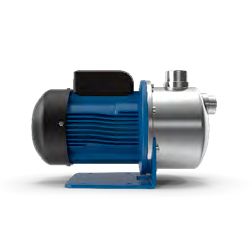
Pumps &
Controllers
02: Native Matter or Bridged Device
Native or a Bridged Device?
From a device maker’s perspective, you can consider Matter a protocol without a gateway. When Matter is used over Wi-Fi scenario, you don’t have to build a gateway. Any Wi-Fi router can connect your devices to the Matter network. If Matter is transmitted via Thread, a border router is required. However, this standard function is typically included in the ecosystem provider’s infrastructure.
Matter Bridge
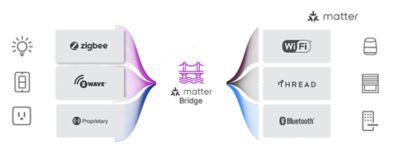
The Matter Bridge is a standard function that enables devices using other protocols such as 802.15.4 protocol to connect to a Matter system. This allows you to expand the revenue and extend the life of existing Zigbee, Z-Wave, and other proprietary devices. However, developing a multiprotocol gateway that can bridge existing Zigbee and Z-Wave devices into the same Matter system is challenging.
MATTER BRIDGE
The Matter standard combines Wi-Fi, Thread, and Bluetooth LE protocols. The Matter Bridge is a standard function that can connect devices using other wireless protocols into the system.
Unify SDK: The Solution to Multiprotocol Gateways
Silicon Labs’ Unify SDK can radically simplify multiprotocol software development for gateways such as Matter Bridge. It allows you to develop and maintain just one codebase while Unify SDK handles protocol-specific code translations.
Benefits of Unify SDK
- Combine closed- and open-ecosystem strategies - Continue with your closed-ecosystem and launch an adjacent open-ecosystem play through Matter
- Extend the life of existing Z-Wave & 802.15.4 devices - Keep your existing users happy and continue churning revenue in the Matter space
- Reduce your R&D costs and Time-to-Market for Matter - Simplify multi-protocol software development on your gateway products with Unify SDK
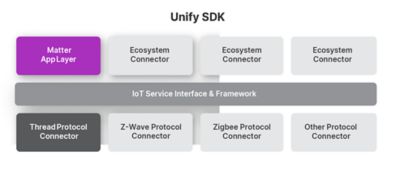
UNIFY SDK
Silicon Labs’ Unify SDK is the only multi-protocol software development tool available that enables device makers to build a Matter Bridge faster, accelerating time-to-market.
03: Own Matter Fabric or Ecosystem
Own App or Ecosystem App?
As a device maker, you can choose between three approaches for the Matter fabric.
- Build your own Matter device and use the fabric already provided by the smart home ecosystem providers. This is the easiest alternative, which however limits your possibilities for branding and tailoring the user experience. This option can also reduce sales because the buyers must own e.g. a Matter-enabled smart speaker to control the device.
- Build a Matter device and your own proprietary App that works with the existing ecosystem fabric. This option saves you the effort and investment needed for the cloud infrastructure and gives more opportunities for a tailored user experience than option one.
- Build a full Matter fabric including a Matter-certified device, mobile App, cloud infrastructure, and a local Matter controller device like a Border Router. Your own Matter fabric can be linked to work with the fabric of the ecosystem providers. The third option requires the highest investment of these three alternatives, yet it allows you to build the most tailored and branded smart home user experience.
04: Matter + Ecosystems
Should You Connect Matter Products to Smart Home Ecosystems?
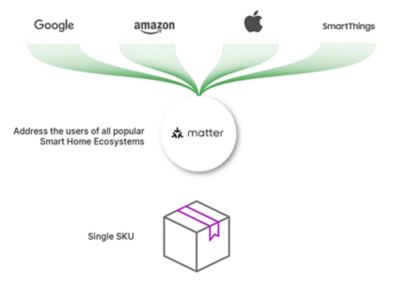
Matter enables smart home products to become compatible with any smart home ecosystem brand. Matter alone does not provide device makers its full potential. Certifying your Matter product with the smart home ecosystems and using the official Works With badges on marketing gives you several advantages.
Benefits of Matter + Smart Home Ecosystems
- Enter the world’s largest smart home markets with a single SKU and increase sales and product margin.
- Allow consumers to buy the devices confidently, knowing that they will work with the devices they already have at home.
- Take advantage of trusted ecosystem user experience and interfaces (UX/UI) familiar to millions of users worldwide to accelerate the market adoption of your products.
- Differentiate by developing additional functionalities unique to specific ecosystems.
- Reduce R&D costs and time to revenue through development platforms and tools.
- No need to build your own fabric – gateway, border, cloud, and app – gateways of various ecosystem providers exist in 100s of millions of homes.
- Bridge existing Z-Wave, Zigbee, and Proprietary devices into Matter to extend revenue generation.
05: Matter + Ecosystem Stacks
Matter vs. Ecosystem Stacks
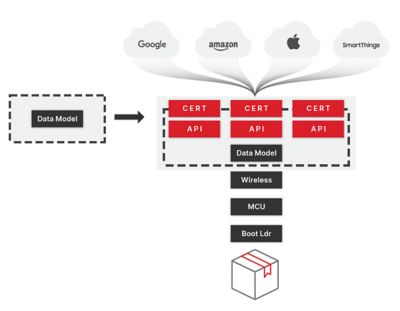
The Matter standard introduces a unified Data Model (DM) compatible with all Matter-enabled IoT ecosystems, which eliminates significant ecosystem-specific development effort.
Instead of implementing several ecosystem-specific Application Programming Interfaces (API), device makers can simply implement a single, standard Matter Data Model for all ecosystems. With Matter, you need to perform only a light-effort interoperability testing and certification process with each ecosystem. The benefit for device makers is simplified software development and reduced interoperability testing and certification effort, saving costs and time-to-revenue.
IoT Ecosystem Certification
The process of design, development, testing, and certification varies with each IoT ecosystem. Learn more about how to get started with different IoT ecosystems.
06: Wireless Design
Choosing the Optimal Wireless Protocol for Matter
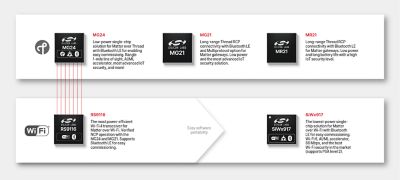
Every home is a unique wireless challenge. Walls, reflections, and interference can deteriorate user experience. Your connected device is only as good as the quality of your connectivity. So, how do you give users the best possible first impression? With Matter, there are three wireless protocols to consider: Wi-Fi and Thread for data communication, and Bluetooth Low Energy for easy device commissioning. Silicon Labs offers you the best wireless performance on the most power-efficient single-chip solutions for all Matter protocols. This reduces design complexity, footprint, and BoM while enabling your devices with reliable wireless connectivity in every room of the house and beyond.
SoC or Module?
Silicon Labs' wireless hardware are available as ultra-compact SoCs and RF-certified modules with built-in antenna.
SoCs
Choose SoC to gain ultimate design flexibility.
Modules
Choose Module to reduce testing and certification costs while accelerating time to revenue.
07 Embedded Development
What is the Right Development Approach for Your Team?
In Matter embedded software development, you can choose between three approaches, each with their pros and cons, depending on your development organization.
Silicon Labs GSDK
The Silicon Labs Simplicity Studio with Gecko Software Development Kit (GSDK) provides your development team the easiest, smoothest, and most integrated development experience for Matter. It includes all the protocol SDKs and Matter SDK with a seamless transition to smart home ecosystem certifications. The most advanced wireless specialist toolkit includes an energy profiler, network analyzer, pin tool, and more at no cost. Example applications save time in getting the development work off the starting blocks. Test harnesses and certification capabilities included in Simplicity Studio accelerate time to revenue.
Silicon Labs Matter GitHub
Through Silicon Labs Matter GitHub, you can access tested and verified Matter software, which is optimized to give the best performance on Silicon Labs hardware and to reduce the time needed for debugging and troubleshooting. This improves your overall product quality and accelerates development. The Silicon Labs Matter GitHub is perfect for those developers and teams that have their own tools and processes.
Unify SDK
Unify SDK provides simplified multiprotocol (Zigbee, Z-Wave) software development for Matter Bridge and gateways. It reduces your development costs and Time-to-Market. You can simply develop and maintain a single codebase — Unify SDK handles protocol-specific code translations.
08: Testing & Certification
How Do You Manage all Three Levels of Certification?
Matter Certification
Silicon Labs’ Matter solutions are already CSA-certified, simplifying your product development and certification effort. However, your end product will not inherit this certification, and it must be tested per CSA instructions by a qualified test house with documentation including the Bluetooth and Wi-Fi certification IDs submitted to CSA. You can use Silicon Labs’ Wi-Fi certification ID if the Wi-Fi Certified logo will not be used with the end product.
Network Stack Certification
Silicon Labs’ wireless network stacks are certified by the respective standardization bodies to save your development time and cost. Simplicity Studio also streamlines testing and certification for your team.
- Silicon Labs Bluetooth Low Energy stack is qualified with the Bluetooth SIG. This certification is passed on to the end product. No need for additional testing. However, the certification documents must be submitted to the Bluetooth SIG.
- Silicon Labs Thread stack is also certified and passed on to your end product. No need for additional testing. However, the certification documents must be submitted to the Thread Group.
- Wi-Fi Alliance certification is mandatory if the Wi-Fi Certified logo will be used with the end product. Silicon Labs Wi-Fi solutions are tested and certified by the Wi-Fi Alliance, making the certification process easier for you. In the case the Wi-Fi Certified logo is not accompanied by the product, certification is not mandatory.
Ecosystem Certification
Interoperability testing and certifications are required with smart home ecosystems for manufacturers to claim the right to use the official Works With badges. Silicon Labs’ implementations have been tested with popular IoT ecosystems, and our documentation, guides, and tools will guide you through the certification processes, saving you time and cost when certifying your devices, and making it easy for you to build a Matter product that works everywhere.
09: Certificate Management
How Will You Manage Your Matter Certificates?
One of the most critical challenges for device makers is how to manage Matter certificates safely during the outsourced manufacturing process, prevent IP theft and counterfeiting threats while streamlining a cost-efficient process, and maintaining independence from the contract manufacturer.
Silicon Labs provides device makers custom certificate injection of Matter certificates. This means that Matter certificates can be safely injected into the Silicon Labs’ wireless SoCs during the manufacturing process. This reduces your manufacturing complexity while delivering a more secure way for managing Matter certificates from the very beginning of the product lifecycle. It also increases your independence, enabling you to relocate production anytime while safely managing certificates. Customize your wireless hardware and MCUs with advanced security and unique certificates with Silicon Labs Custom Part Manufacturing Service.
10: Lifecycle Maintenance
How Will You Maintain Your Installed Base?
The lifetime of a smart home device can extend several years, depending on your application. Nevertheless, you must keep the promise of delivering the user a great experience every day while maintaining your installed base efficiently throughout the lifetime of your device. This includes maintaining software versions and updating security frequently to ensure your installed base withstands rapidly evolving cyber-threats and that users’ private data is protected.
SDK Extended Maintenance Service (SEMS)
Silicon Labs offers device makers the best product longevity with up to 10 years of software and security updates with SDK Extended Maintenance Service.