

Wireless Solutions for Smart Agriculture Applications
The agriculture industry is facing several converging challenges, including overproduction, over-consumption, supply chain issues, and environmental concerns. Wireless connectivity can help and offers a wide range of applications for smart agriculture, from precision farming to crop and livestock management to remote irrigation control and greenhouse automation.
This whitepaper covers new revolutionary use cases for wireless IoT technologies in agriculture and how Wi-SUN can serve as the foundational LPWAN technology for the sector. Take a closer look at how IoT in agriculture empowers farmers to optimize their operations, reduce waste, and improve efficiency, including:
- Climate Monitoring
Sensors continuously monitor field conditions, mapping climate data to determine the most suitable crops and maximize yield potential. - Greenhouse Automation
Provide accurate real-time information, including soil condition, lighting, temperature, and humidity. - Crop Management
Detect anomalies and to take timely preventive measures against diseases and infestations that can harm crop yields. - Cattle Management and Monitoring
Wireless sensors attached to cattle enable real-time monitoring so farmers can identify sick animals promptly. - Precision Farming
Using sensor data, farmers can estimate the optimal amounts of water, fertilizers, and pesticides required by crops. - Predictive Analytics
Data analytics makes farming more manageable and predictable by analyzing weather conditions and other factors.
IoT in Agriculture Enabled by Wireless Solutions
In the face of challenges caused by climate and socio-economic change, agriculture is one of the key industries to scrutinize and invest in. Overproduction, overconsumption, and supply chain issues cause a significant amount of waste. According to the Intergovernmental Panel on Climate Change IPCC, overproduction leads to significant wastes of water, energy, and labor resources. The agriculture industry also contributes to our increased carbon footprint, high levels of deforestation, and land degradation.
To combat these issues, in addition to enhancing food security, reducing emissions, boosting crop yield, and achieving better resource utilization, there’s a lot of technological development happening in this space. Wireless connectivity and Internet of Things IoT technology offer new solutions for the agricultural industry, and it’s leading to noticeable economic benefits right from the first harvest.
This paper covers new revolutionary use cases for wireless IoT technologies in agriculture and how Wi-SUN (Wireless Smart Ubiquitous Network) could serve as a foundational LPWAN technology for the sector.
Large-Scale Reform Across Agricultural Verticals
To date,wireless connectivity has supported extensive restructuring in agriculture via technological innovation and digital transformation. Processes like climate control and monitoring automate laborious,expensive processes and improve a farmer’s decision-making capabilities. With this technology,it’s easier to identify large-scale patterns and small-scale issues right when they arise. This is “smart”agriculture. The goal is to increase the quantity and quality of products while optimizing the human labor involved.
Present-day farmers have several technologies available to them today:



Sensors
Soil, water, light, humidity, temperature management etc.
Smart Agricultural Equipment
Agricultural equipment, including both robotics and human controlled equipment, drives labor savings, increase productivity and safety. Smart Agriculture uses both ground - based and aerial drones for crop health assessment, irrigation, crop monitoring, crop spraying, planting, soil, and field analysis.
Connectivity Protocol Options
Wi-SUN, cellular, LoRa, and others.
Implementing Smart Agriculture in Different Farming Contexts
In combination, the technologies listed above drive labor savings and increase productivity and safety. For example, smart agriculture uses both ground-based and aerial drones for crop health assessment, irrigation, crop monitoring, crop spraying, planting, soil, and field analysis.
For example, in rural agriculture, IoT technology is used to monitor and control moisture and nutrient levels across large swaths of land. In marine agriculture settings, it’s used for activities like seaweed cultivation. At one seaweed farm in Okinawa, Japan, low-energy, battery-operated Wi-SUN devices were attached to buoys to measure water temperature and salinity. More devices—all built to exacting IEEE standards—were in an onshore facility, transferring data to the cloud for remote access and analysis. Ultimately, approaches like marine permaculture, which combines food production with carbon reduction, should become self-sustaining. That said, IoT technology can be invaluable in monitoring environments and providing early warning if something’s not right.
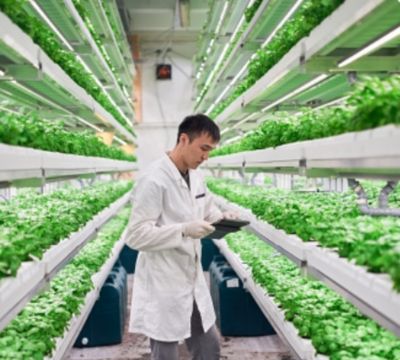
These same benefits extend to greenhouse production and vertical farming. Greenhouses provide a simple but effective way to reduce the influence of weather on crop production. IoT technology helps by automating environmental controls and maximizing crop yields. Wi-SUN technology is already being used in Japan for vegetable and mango production.
Vertical farming methods are one response to a growing need to feed large and expanding urban populations. They would not be feasible without IoT technology, which can be used to control lighting, temperature, irrigation, and nutrients. Regardless of the farming method, the goal is the same— help crops flourish—and IoT can support a farmer in those efforts.
Wireless Use Cases in Agriculture IoT
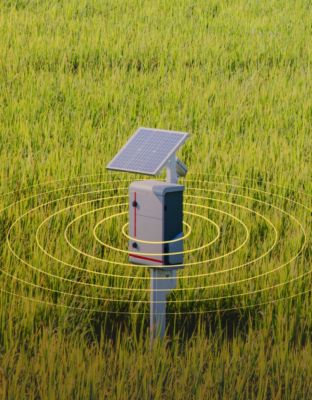
Climate Conditions Monitoring
The most popular agriculture IoT gadgets are weather stations consisting of various smart farming sensors. Sensors, located across the field, collect data from the environment for mapping climate conditions. This information is used to choose appropriate crops and better understand the crop yield a particular piece of land can support.
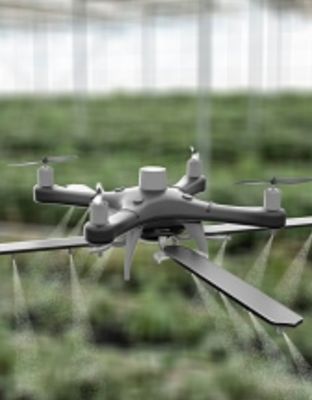
Greenhouse Automation
IoT sensors offer accurate, real-time information on greenhouse conditions such as soil condition, lighting, temperature, and humidity.
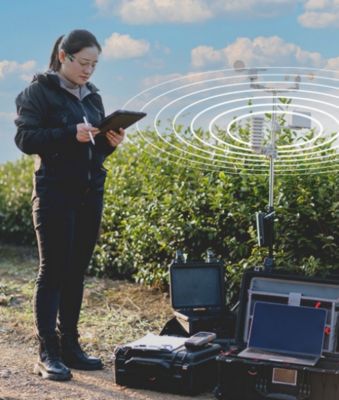
Crop Management
Like weather stations, field sensors collect temperature, humidity, and lighting data. That data is used to detect anomalies and effectively prevent diseases or infestations that can harm the yield.
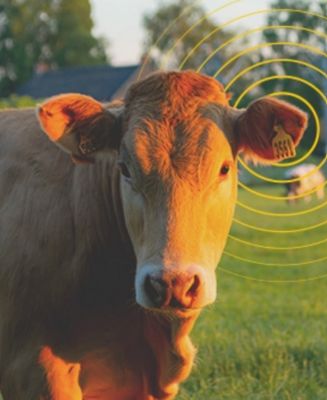
Cattle Monitoring and Management
Agriculture sensors are attached to animals to monitor their location and health. If a sick animal is separated from the herd, farmers can avoid contamination.
Precision Farming
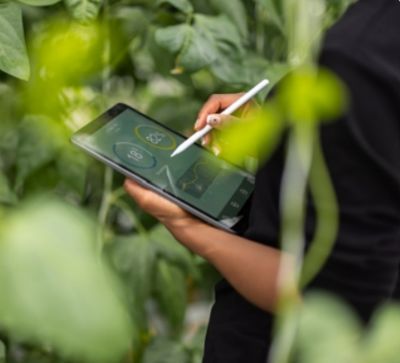
Precision farming is about improving efficiency with data-driven decisions. It’s one of the most widespread and effective applications for IoT in agriculture. By using IoT sensors, farmers can collect a vast array of data on lighting, temperature, soil condition, humidity, CO2 levels, and pest infections. This data enables farmers to estimate the optimal amounts of water, fertilizers, and pesticides that their crops need. Ultimately, this approach reduces expenses and results in healthier crops.
Predictive Analytics
Precision agriculture and predictive data analytics go hand in hand. While IoT and smart sensor technologies are a goldmine for highly relevant, real-time data, the use of data analytics helps farmers make sense of it and come up with important predictions around crop harvesting time, the risks of diseases and infestations, yield volume, etc. Data analytics tools help make farming, which is inherently highly dependent on weather conditions, more manageable and predictable.
Non-Proprietary vs. Proprietary Wireless Solutions
Like in many IoT applications, there are both proprietary and non-proprietary solutions in smart agriculture. Proprietary solutions allow farmers to take a walledgarden approach with complete control over their ecosystem and implementation. Non-proprietary solutions ensure interoperability across multiple device types and vendors. Depending on your unique application requirements, you can choose the approach that best suits your needs.
Wi-SUN Technology: A Non-Proprietary Solution for Modern Farming
Wi-SUN is the leading IPv6 sub-GHz mesh technology for smart city and smart utility applications. It brings interoperable, multi-service mesh networks to service providers, utilities, municipalities/local government, and other enterprises. Wi-SUN is an open-standard protocol based on IPv6 and IEEE 802.15.4g/e specifications. It can be used for large-scale, outdoor IoT wireless communication networks in a wide range of applications covering both line-powered and battery-powered sensor nodes.
Wi-SUN field area networks FAN technology is ideally suited for outdoor IoT networks as it offers good range in dense urban areas. The range and reliability of WiSUN FAN network technology means it’s also suitable for IoT in agriculture.
Wi-SUN Network Components
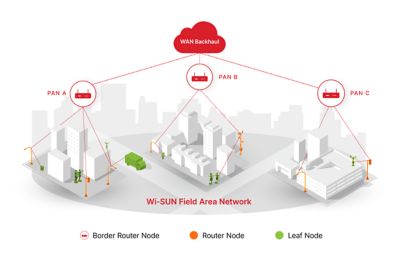
As shown here, Wi-SUN consists of a border router BR, router node, and leaf node. Wi-SUN is a field area network FAN and can operate in a full mesh or star topology.
Border Router Node
Provides wide-area network WAN connectivity to FAN, maintains source routing tables, and controls node authentication and key management services.
Router Node
Controls upward and downward packet forwarding.
Leaf Node
Offers minimum capabilities, mostly battery-operated sensor nodes.
Top Benefits of Wi-SUN FAN
| Requirement | Product Feature | Benefit |
|---|---|---|
| IP-based solution | IPv6/6LoWPAN | Extensive interoperability Extensive security Established naming, addressing, translation, lookup, discovery Application-level data model and services Established network management |
| Open standards | Based on IEEE, IETF and Open standards | Leverage existing proven standards, rather than “reinventing the wheel”; not locked to a specific vendor |
| Global solution | Unlicensed bands: 2.4 GHz Sub-GHz dominant FSK and OFDM modulations | Supports global and regional sub-GHz frequency bands |
| Radio options | FSK and OFDM modulations | Offers a variety of data rates and coverage for various deployment scenarios (Urban to Rural) |
| Throughput | 50 kbps to 2400 kbps | Addresses the differing throughput requirements of several potential use cases |
| Applications types | High/low throughputs at low power | Supports line powered as well as battery-operated |
Complete Silicon Labs Wi-SUN Offering
Silicon Labs’ Wi-SUN hardware is certified by the Wi-SUN Alliance, a global industry association devoted to seamless LPWAN connectivity. Wi-SUN builds on open-standard internet protocols IP and APIs, enabling developers to extend existing infrastructure platforms to add new capabilities. Built to scale with long-range capabilities, high-data throughput and IPv6 support, Wi-SUN simplifies wireless infrastructure for industrial applications, the evolution of smartcities, and smart agriculture.
Proprietary Networks for IoT in Agriculture
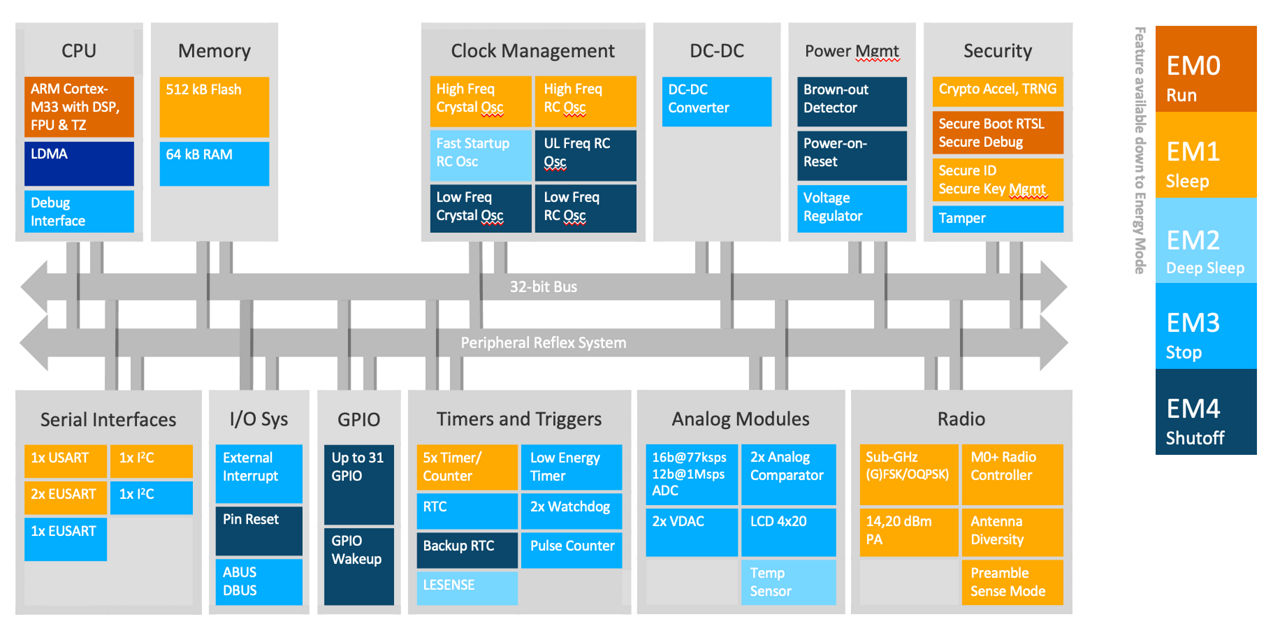
While Wi-SUN is a great fit for some IoT agriculture applications, there are others that are better suited for a proprietary approach. These applications don’t need the complexity and overhead that come with a standardized mesh approach or may have mobile assets that are not easily supported by standardized approaches. With devices like the EFR32FG23, customers can develop their own low-power, point-to-point, or star networks that better suit their needs.
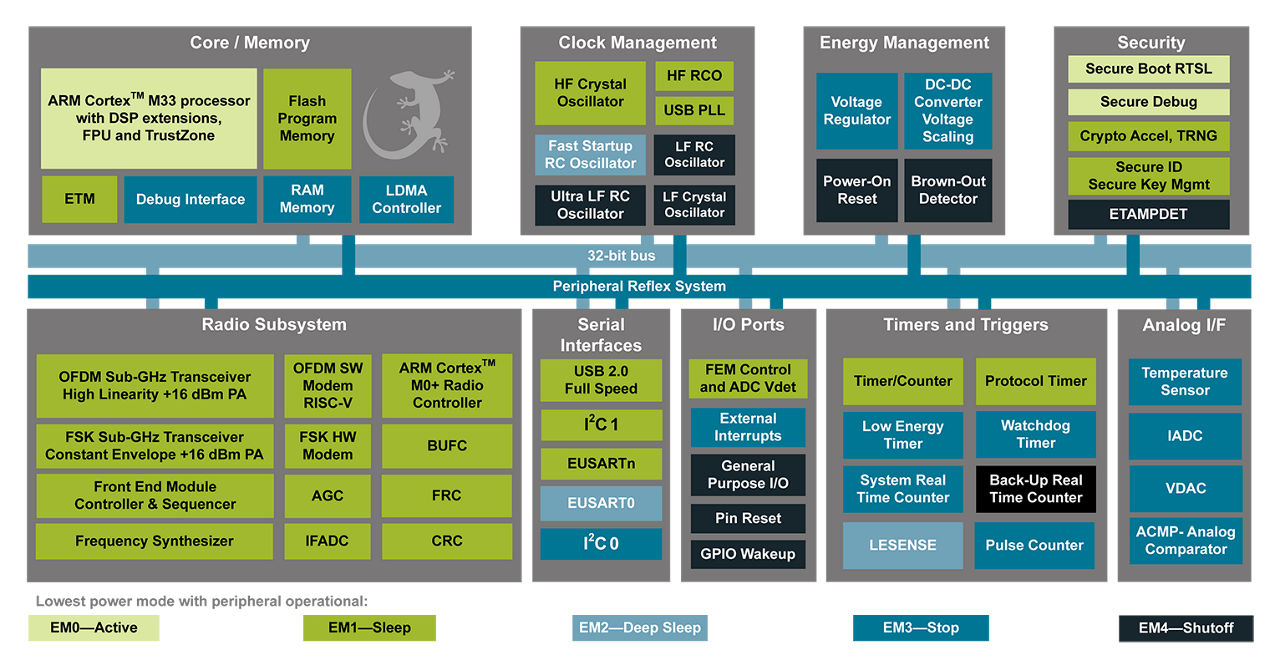
For more in formation on Silicon Labs’ Wi-SUN offerings, visit the FG23 and FG25 product pages, and for a look at how Silicon Labs’ devices are supporting IoT in agriculture, read our case study on Bee Hero who are using IoT sensor technology to save the bees.
Silicon Labs’ Wi-SUN FAN 1.1 Support
Silicon Labs’ Series 2 family of wireless SoCs. EFR32FG25 features support for the Wi-SUN FAN1.1 spec, which consists of multiple radios and a 32-bit ARM® a Cortex® M33 core with 97.5 MHz platform.
Silicon Labs’ Wi-SUN Support for Global Frequency Bands
- 902 928 MHz in USA and many other regions
- 902 907.5 & 915 928 MHz in Brazil
- 920 MHz in Japan
- 863 870; 870 876 MHz in Europe
- 865 868 MHz India