

Fundamentals of Matter and Smart Home Ecosystems
Understanding the current state of IoT interoperability starts with understanding the smart home ecosystem holistically. While siloed today, the ecosystem is a proven growth platform for smart home businesses that address the needs of all stakeholders—users, IoT device makers, and ecosystem providers. With the introduction of Matter and an open ecosystem model, there’s an even better chance for great products to scale.
Here, we’ll answer the following questions comprehensively by considering the unique perspectives of users, ecosystem providers, and device makers:
- What are the benefits of smart home ecosystems?
- What are the most common challenges in the smart home industry today?
- How does Matter address those challenges?
Introduction
Fundamentals of Matter and Smart Home Ecosystems for Decision Makers and Product Managers
Why do smart home ecosystems exist? What’s wrong with today’s siloed smart home industry? Why should device makers make an investment in Matter? How will Matter change things for consumers and device makers? Understanding the present state of IoT interoperability is crucial for succeeding in the open, Matter-enabled market in the future. In this whitepaper, we explore why a unified IoT ecosystem is important not just from the perspective of consumers, but also design decision makers and product managers.
Why Smart Home Ecosystems?
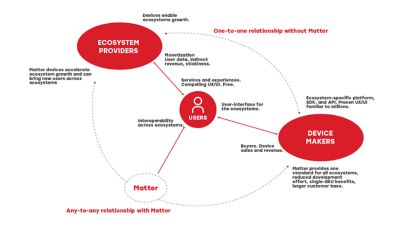
To answer this question, you must consider it from the perspectives of all the key ecosystem stakeholders, including users and providers of ecosystems, as well as smart home device makers. Everyone involved must benefit from the ecosystem, otherwise it won’t be sustained and give rise to a flourishing ecosystem of smart home applications, services, and products – which is the ultimate vision behind Matter.
So, why do smart home ecosystem providers develop and grow their ecosystems? Why do consumers prefer to buy products which belong to an ecosystem? Why do IoT device makers develop and build products that function as a part of one or several ecosystems? The following sections explain the main ecosystem benefits from every stakeholder’s perspective.
The Benefits of Smart Home Ecosystems
| USERS | ECOSYSTEM PROVIDERS | DEVICE MAKERS |
| Familiar user-experience and user interface (UX/UI). | Monetization - increase advertisement audience, sell cloud services, cell phone subscriptions, etc. | Increase product sales using an ecosystem badge as a lever. |
| Integrated user interfaces (Apps) on smartphones, smart speakers, TVs, etc. | Accelerate the adoption of services and subscriptions. | Create solutions consisting of several products that function in unison. |
| Control all smart home devices on the same control device and App. | Strengthen the stickiness of services and subscriptions and customer loyalty. | Proven user experience and interface (UX/UI) familiar to millions of people. |
| Build automated solutions by combining many devices of an ecosystem. | Collect customer information, usage patterns, behavioral data, etc. | Ecosystem-specific SDK and API. |
Users Love the Convenience of Smart Home Ecosystems
Ecosystem-specific SDK and API.The leading smart home ecosystem brands such as Amazon, Apple, Samsung SmartThings, and Google have been rolling out their services globally for decades. Millions of people all around the world are familiar with their user experiences and interfaces (UX/UI). The sheer convenience of knowing how things work keeps people loyal to a specific ecosystem provider. The providers have seamlessly integrated their user interfaces into various devices people use daily: smartphones, tablets, smart speakers, TVs, and more. For a user of smart home products, it is so easy to buy devices supporting their favorite ecosystem and control all their devices through the same user interface – whether a mobile app, smart speaker or TV. Additionally, devices of a specific manufacturer supporting the same ecosystem can usually be combined, automated, and controlled through the ecosystem, delivering extra user value.
Providers use Ecosystems for Monetization
Most ecosystem providers have different incentives for developing and growing an ecosystem user-base. However, there are several common nominators across all of them. Typically, smart home ecosystems are a vehicle to grow the provider’s business elsewhere – e.g., increase the audience for advertisements, grow the adoption of cloud services, or sell various subscriptions such as software as a service or mobile communication services. Ecosystems help providers to strengthen the stickiness and customer loyalty of their other services and subscriptions while also allowing them to collect more customer information, behavioral data, usage patterns, etc.

Device Makers Increase Unit Sales and Reduce Costs through Smart Home Ecosystems
Popular smart home ecosystems such as Amazon Alexa, Apple HomeKit, Samsung SmartThings, and Google Home have millions of loyal users worldwide. They are familiar with the user experience and user interface of their favorite ecosystem and know how things work – like how to set up a new device. The vast user bases of the popular ecosystems help IoT device makers to boost their product sales quickly and globally. Ecosystems also enable device makers to create automated solutions out of many devices, fueling the sales of a broader product line and increasing their share of consumers’ or households’ pockets. Additionally, the ready-made, tested, and field-proven ecosystem user experience and interface, already familiar to millions of users worldwide, reduce device makers’ market risks and product development costs.
Challenge Today – Ecosystem Silos
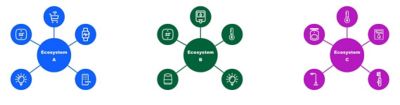
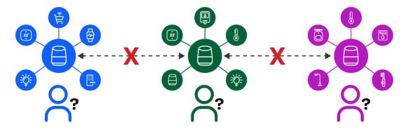
Today, the smart home industry is fragmented into several technology silos with a lack of interoperability across borders. The devices belonging to one smart home ecosystem do not work with the devices of other ecosystems. How do the ecosystem silos affect IoT device makers and users?
The Challenge for Device Makers: A Fragmented User Base
The primary challenge for the device makers is a fragmented user base across several siloed smart home ecosystems with no interoperability. This affects device makers in many ways. Firstly, each ecosystem provides its own application programming interface (API) through which device makers must integrate devices into the cloud. Additionally, there are ecosystem-specific interoperability testing and certification processes to follow, increasing development costs and time to market. In the worst case, multiple variants or stock-keeping units (SKU) per product must be produced and maintained to address the users of multiple ecosystems. The fragmented user base increases product development costs, operational costs, and time-to-market.
The Challenge for Consumers: Poor Interoperability Between Devices
Ecosystem CSmart home users experience the ecosystem challenges from the opposite perspective as device makers. Users are confused because smart home products are fragmented into different silos, and the smart home devices of one ecosystem cannot be controlled by the smart speaker or app of another ecosystem and vice versa. Users might need several apps, gateways, and subscriptions for managing and controlling their devices, increasing the hassle at home and wasting money. Consumers hesitate to buy new devices because they can’t be sure whether they will work with the other devices at home, slowing down the smart home adoption.
Matter Opens Up Ecosystem Silos
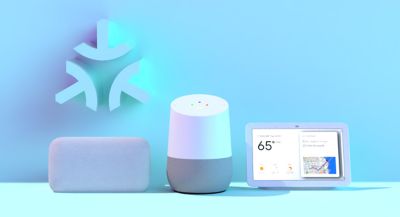
Matter brings universal interoperability between products of different smart home ecosystems and brands and simplifies device setup and usability. It’s an application-level protocol built from the best pieces of existing tried-and-true protocols, including Google Weave, Apple HomeKit, and Zigbee. Matter uses three of the world’s leading wireless technologies – Wi-Fi and Thread for operation and Bluetooth Low Energy for easy device setup.
Bridging Existing Protocols with Matter
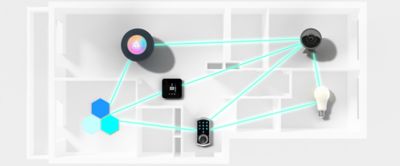
The Matter standard includes the so-called Matter bridge, a logical software component running, e.g., on smart home gateways. It bridges devices using other protocols such as Zigbee and Z-Wave to the Matter system, allowing device makers to extend the life of their current smart home product line in the Matter era, increasing revenues and profits.
Matter Benefits for Users
The Matter protocol will improve user experience and simplicity of use for wireless, ecosystem-enabled, smart home devices. The users can now control their smart home devices (e.g., lights, thermostats, locks) of any brand belonging to any smart home ecosystem, using an app or smart speaker of their choice, regardless of the vendor and ecosystem provider, when Matter is enabled. Commissioning of Matter devices offers a radically simplified unboxing experience.
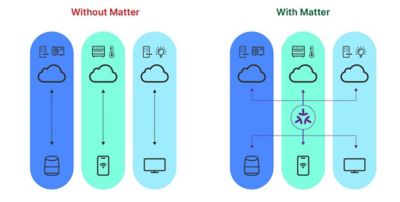
Secondly, Matter reduces consumer confusion in retailing. Users can buy new smart home devices with confidence, knowing
that they will work with the other devices at home as long as they are Matter-labeled.
Join the World’s Biggest Smart Home Ecosystem
With Matter, device makers can accelerate revenue growth by addressing the users of all popular smart home ecosystems such as Amazon, Apple, Samsung SmartThings, and Google through a single Matter-enabled solution. The single-SKU for all ecosystems increases sales margin
Accelerate Smart Home Adoption
With Matter, consumers can buy new devices with confidence, knowing that the device they buy will work with the other devices at home. This gets your smart home business off the ground faster.

Reduce R&D Costs and Time-to-Market
One SKU for all ecosystems unlocks the economies of scale benefits – one SDK, one codebase, one hardware design, and one maintenance scheme reduce development, manufacturing, and operational costs and risks while accelerating time-to-market.
Simplify user-experience and reduce costs
For the device maker, Matter brings a gatewayless smart home alternative. Your devices can connect through any Wi-Fi router, the most ubiquitous wireless connectivity in homes worldwide. In Thread, your devices can use a Border Router residing in the ecosystem to connect.

Extend the life of existing devices
Are you running a smart home product line on wireless protocols such as Zigbee, Z-Wave, or Proprietary? The standard Matter bridge functionality allows you to keep the existing business going while launching an adjacent open ecosystem play on Matter! Keep existing users happy, continue churning revenue just like before while exploring the endless opportunities the ecosystem of all smart home ecosystems, Matter, can bring to you.
Conclusion
Despite today’s siloed smart home ecosystems, the ecosystem value model has become a proven growth platform for flourishing smart home businesses benefiting all stakeholders: Users, IoT device makers, and ecosystem providers. However, Matter introduces an open ecosystem model, tearing down the siloes and transforming the unscalable one-to-one relationship between the ecosystems and IoT device makers to a more scalable any-to-any relationship, enhancing the value for all stakeholders.