




Wi-SUN Products
Certified Wi-SUN Technology from the Leader in IoT
Wi-SUN Certified Products


- Hardware
Hardware
| Product Name | Wi-SUN Certified | MCU Core | Frequency Range (MHz) | Flash (kB) | RAM (kB) | Max Output Power (dBm) | GPIO | Security | Peak RX Sensitivity |
|---|---|---|---|---|---|---|---|---|---|
|
FEATURED
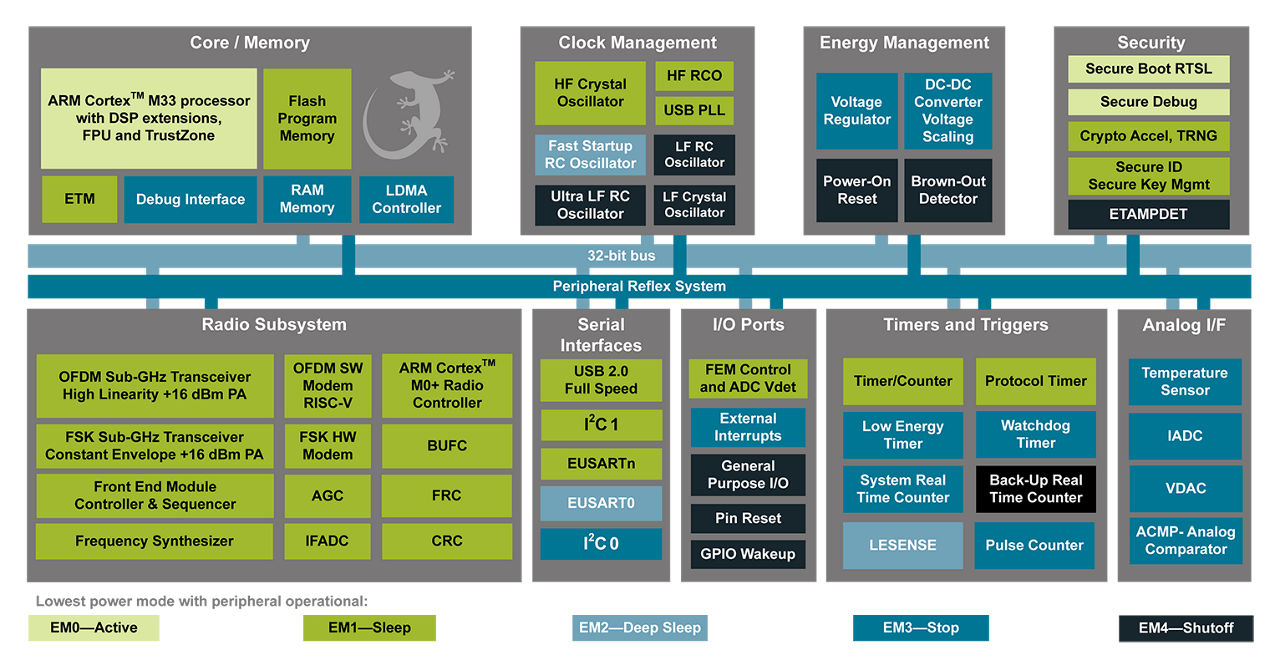
EFR32FG25 Series 2 SoCs
Sub-GHz Wireless SoCs
|
ARM Cortex-M33 | 470 928.1 | 1152 , 1920 | 256 , 512 | 16 | 36 , 37 | AES-128 AES-256 ECC SHA-1 SHA-2 | -125.8 (4.8 kbps OQPSK @ 915 MHz) | |
|
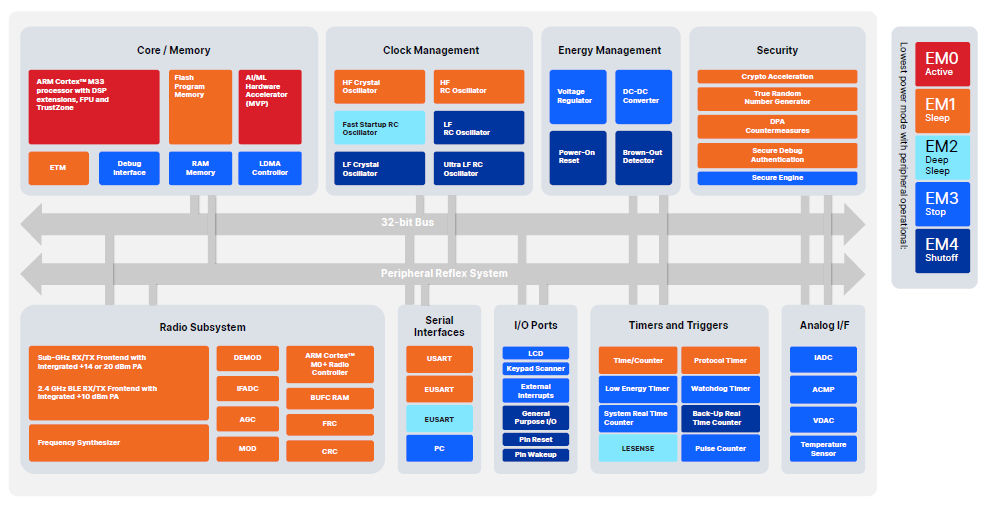
EFR32FG28 Series 2 SoCs
Sub-GHz Wireless + 2.4 GHz BLE SoCs
|
ARM Cortex-M33 | 110 970 | 1024 | 128 , 256 | 16 | 31 , 49 | AES-128 AES-256 ECC SHA-1 SHA-2 | -124.8 (4.8 kbps OQPSK @ 915 MHz) |

Build, deploy, and manage your Wi-SUN network from end to end, with Silicon Labs and Digi.
- Kits and Boards
Kits and Boards
Wi-SUN Development Kits
The EFR32FG25 Wi-SUN Pro Kits are designed to support the development of Wireless IoT devices based on the Sub-GHz WiSUN FAN. The Pro Kits include a radio board that provides a complete reference design for the EFR32FG25 Wireless SoC, with the matching network for +16 dBm covering 863-876 or 902-928 MHz. Each Wi-SUN Pro Kit includes 3 complete mainboard and radio board setups allowing for configuration of a multi-node test network.
The Wireless Pro Kit Mainboard contains an on-board J-Link debugger with a Packet Trace Interface and a virtual COM port, enabling application development and debugging of the attached radio board as well as external hardware. The mainboard also contains sensors and peripherals for easy demonstration of some of the EFR32's many capabilities..
Wi-SUN-PK6015A 863-876 MHz
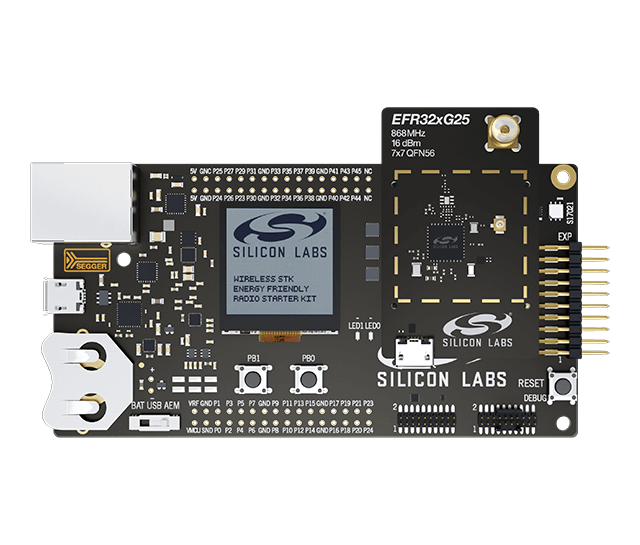
EFR32FG25 Wi-SUN 863-876 MHz +16 dBm Pro Kit
The EFR32FG25 Wi-SUN Pro Kit is designed to support the development of Wireless IoT devices based on the Sub-GHz Wi-SUN FAN. The Wi-SUN-PK6015A Pro Kit includes a radio board that provides a complete reference design for the EFR32FG25 Wireless SoC, with matching network for +16 dBm covering 863-876 MHz.
Wi-SUN-PK6016A 902-928 MHz
EFR32FG25 Wi-SUN 902-928 MHz +16 dBm Pro Kit
The EFR32FG25 Wi-SUN Pro Kit is designed to support the development of Wireless IoT devices based on the Sub-GHz Wi-SUN FAN. The Wi-SUN-PK6016A Pro Kit includes a radio board that provides a complete reference design for the EFR32FG25 Wireless SoC, with matching network for +16 dBm covering 902-928 MHz.
Wi-SUN Compatible Radio Boards
| Radio Board | Frequency Band | Flash (kB) | RAM (kB) | Output Power (dBm) | Wi-SUN | Bluetooth 5 | Bluetooth Mesh | Zigbee | Thread | Sub-GHz | 2.4 GHz |
| xG28-RB4400C | 863-928 MHz | 1024 | 256 | 14 | ✔ | ✔ | ✔ | ||||
| xG28-RB4401C | 869*928 MHz | 1024 | 256 | 20 | ✔ | ✔ | ✔ | ||||
| FG25-RB4270B | 902 - 928 MHz | 1920 | 512 | 16 | ✔ | ✔ | |||||
| FG25-RB4271A | 863 - 876 MHz | 1920 | 512 | 16 | ✔ | ✔ | |||||
| FG25-RB4272A | 470 - 510 MHz | 1920 | 512 | 16 | ✔ | ✔ | |||||
| SLWRB4164A | 915 MHz | 1024 | 256 | 19 | ✔ | ✔ | ✔ | ✔ | ✔ | ✔ | ✔ |
| SLWRB4163A | 868 MHz | 1024 | 256 | 19 | ✔ | ✔ | ✔ | ✔ | ✔ | ✔ | ✔ |
| SLWRB4170A | 868 - 915 MHz | 1024 | 256 | 19 | ✔ | ✔ | ✔ | ✔ | ✔ | ✔ | ✔ |
- Software and Tools
Software and Tools
Wi-SUN Software Development
Silicon Labs Wi-SUN SDK includes industry-leading software stacks and development tools for Wi-SUN end nodes and border routers. In conjunction with SoCs and reference applications for Wi-SUN, developers can use software and tools from Silicon Labs to quickly and reliably:
- Develop multi-node mesh networks
- Monitor and debug multiple nodes simultaneously
- Visually analyze system performance
| Wi-SUN SDK |
|
Related Documentation
-
Technical Documentation
Find Data Sheets, App Notes and More.
-
Wi-Sun Software Reference Documentation
Develop and prototype smarter. Get to market faster.
- EFR32FG12 PHY (FAN) Product Certificate
- EFR32MG12 PHY (FAN) Product Certificate
- FAN 1.1 Profile (Border Router) Product Certificate - WSA0392
- FAN 1.1 Profile (Router) Product Certificate - WSA0391
- FAN 1.1 PHY Certificate (900 MHz) - EFR32FG25 - WSA0373
- FAN 1.1 PHY Certificate (800 MHz) - EFR32FG25 - WSA0345
- Wi-SUN Alliance
Development Questions?
-
Visit The Community
Engage with our engineers and developers from around the world and check out our knowledge base articles featuring FAQs, example code and additional resources.
- Applications
Applications
Simplify Wireless Connectivity

Smart Metering

Smart Cities

Street Lighting
- Learn About Wi-SUN
Learn About Wi-SUN
overview
What is Wi-SUN?
Wi-SUN (Wireless Smart Ubiquitous Network) is the leading IPv6 sub-GHz mesh technology, and a wireless communication standard that facilitates seamless connectivity among smart-grid devices. It’s designed for large-scale outdoor IoT networks, such as wireless mesh networks for Advanced Metering Infrastructure (AMI), home energy management, and distribution automation. Wi-SUN is based on the IEEE 802.15.4g standard for the physical layer and the IEEE 802.15.4e standard for the MAC layer, ensuring low power consumption and high scalability. The Wi-SUN Alliance is responsible for the development of the standard and is a global ecosystem of member companies seeking to accelerate the implementation of Field Area Networks (FAN) and Internet of Things (IoT), and Silicon Labs is a proud Wi-SUN Alliance Promoter Member.

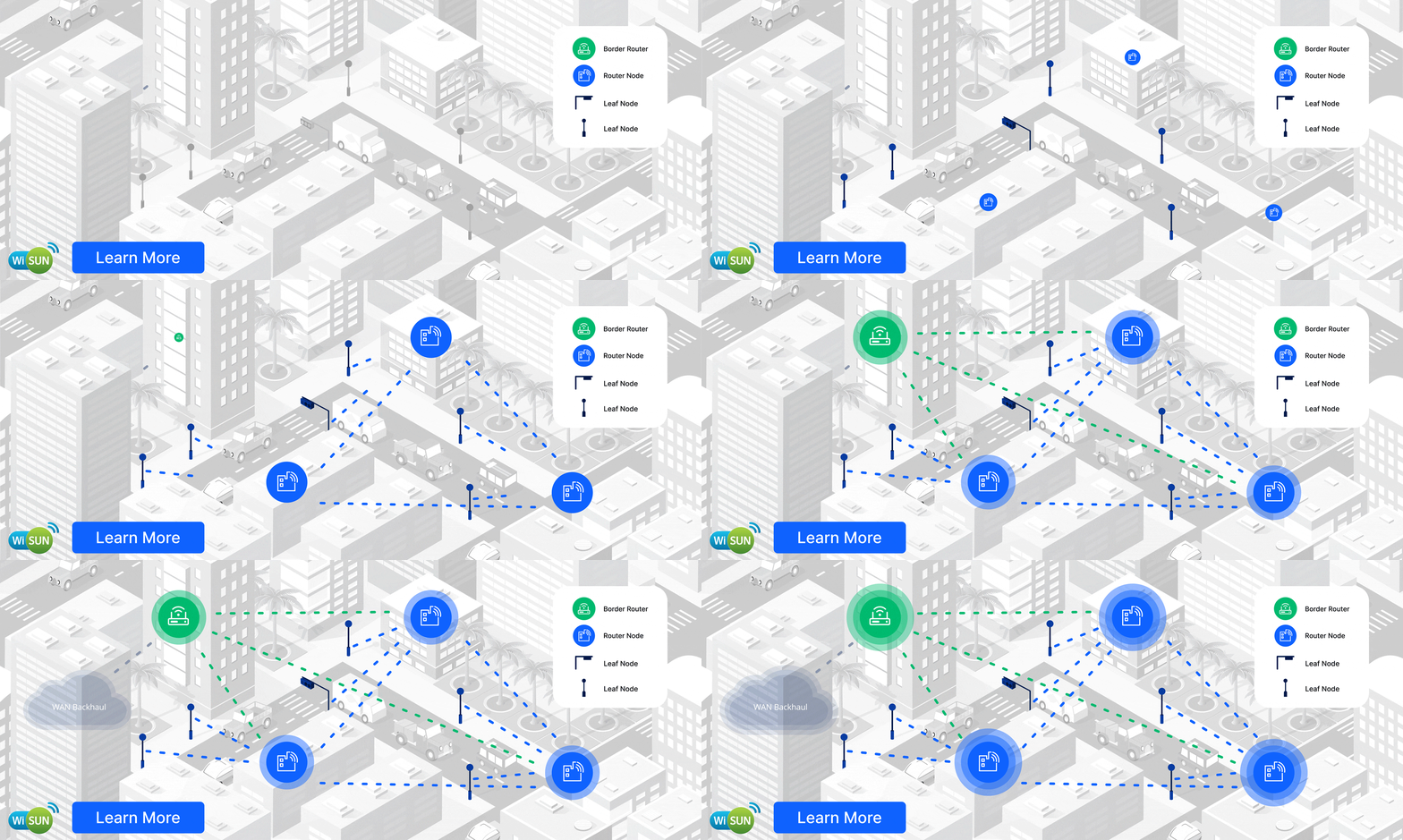
How Does Wi-SUN Work?
Wi-SUN utilizes mesh networking to enable long-range, low-power communication for smart city, utility, and industrial IoT applications. Operating on un-licensed Sub-GHz frequencies, it ensures scalability, reliability, and security. Wi-SUN supports extensive networks with self-healing and self-forming nodes, capable of covering wide areas with minimal infrastructure.
Why Partner with Silicon Labs for
Wi-SUN?
Silicon Labs has been at the forefront of Wi-SUN standard development for over a decade. With a rich history of Wi-SUN certified devices, a certified stack, comprehensive range of reference designs and development tools, Silicon Labs offers a one-stop-shop solution for all your smart city projects and more. The company received its first Wi-SUN certification in April 2021 and recently achieved the FAN1.1 profile and PHY certifications. The FAN 1.1 certification includes high throughput OFDM support, underscoring Silicon Labs' commitment to advancing Wi-SUN technology and providing robust solutions for IoT applications.

Wi-SUN certifications
Wi-SUN FAN certificates are part of the certification program developed by the Wi-SUN Alliance to ensure devices meet specific standards for interoperability and security in Field Area Networks (FAN). These certificates verify that devices comply with the Wi-SUN FAN profile, which includes rigorous testing for communication protocols, security features, and performance. FAN 1.1 certificates are listed below for ready reference:


WiSUN FAN 1.1 Options
FAN 1.1 offers three main options:
- FAN 1.1 Core (aka FAN 1.0+): This builds upon FAN 1.0 with just one new feature PAN - wide Information Elements, enabling broader information sharing across the network.
- FAN 1.1 High Performance (HP): This option caters to devices needing more processing power. It introduces Full Function Nodes (FFNs) for tasks requiring robust functionality and SUN-OFDM PHYs. Another notable feature that was introduced by FAN1.1 specification is ‘Mode Switch’ that means modulation and date rate negotiation between nodes is possible. Supported on both FG25 (FSK and OFDM) and FG28 (FSKonly)
- FAN 1.1 Low Energy (LE): This option focuses on minimizing power consumption for battery-powered devices. It introduces Limited Function Nodes (LFNs). FAN 1.1 LFN is supported by EFR32FG28 (FSK only) and EFR32FG25 (FSK & OFDM).
Learn more about Wi-SUN with these training assets
- FAQs
FAQs
Wi-SUN FAQs
Our experts have answered the most frequently asked questions about Wi-SUN. Click on each Wi-SUN FAQ to reveal the answer and additional resources.
Featured Wi-SUN Resources











Works With 2025 On-Demand IoT Training
Relive every keynote, fireside chat, and deep-dive training from this year’s premier IoT conference. Stream the insights, innovations, and inspiration that are shaping the connected future—whenever and wherever it suits you.